The history of Monti Castle
From military fortress to cultural laboratory: genesis and evolution of the "most beautiful monument of military and feudal architecture of the early 16th century in the Terra d'Otranto"
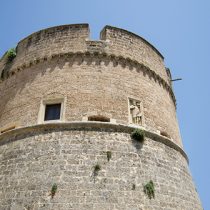
The Castle of Corigliano d’Otranto represents, in the words of G. Bacile di Castiglione, the “most beautiful monument of early sixteenth-century military and feudal architecture in the Terra d’Otranto,” and certainly the most successful example of the transition from medieval square towers to Renaissance round towers.
The adaptation to new military needs, with the introduction of gunpowder, led, in the 16th century, to the castle’s architectural revolution. It was equipped with a deep moat and agile and effective defensive structures, such as the curtain walls with bastions and the four circular towers, embellished with friezes, dedicated to four saints associated with four cardinal virtues.
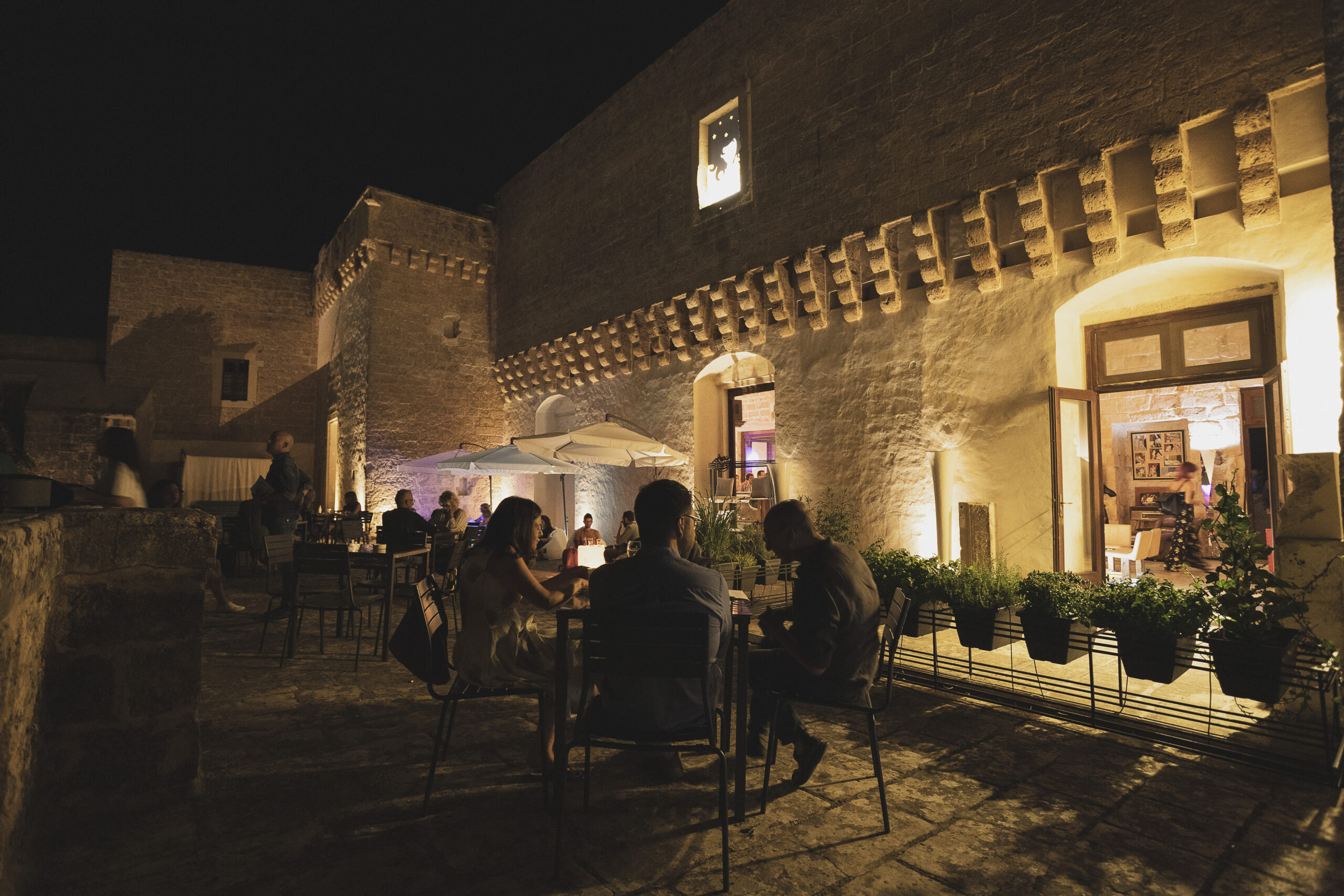
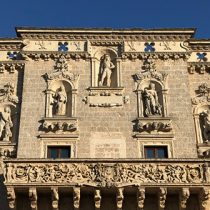
A Baroque façade built in the 17th century, with decorative corbels and anthropomorphic figures along the balcony, is the face of the Castello de’ Monti in Corigliano d’Otranto as it stands today. The statues, placed within niches, represent virtues, the half-busts above the windows depict figures of the period, while the architraves feature the mottos of Andrea Peschiulli.
No furnishings or ornaments bear witness to this period of splendor and wealth. Instead, some structural modifications made starting in the 18th century suggest the site’s use for manufacturing purposes. Indeed, the castle, from a noble residence, was used as an underground olive oil mill, then as a steam mill, and finally, for much of the 20th century, as a tobacco factory, reflecting the area’s economic and manufacturing vocation.
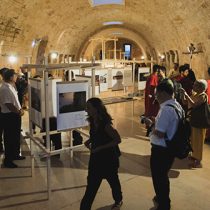
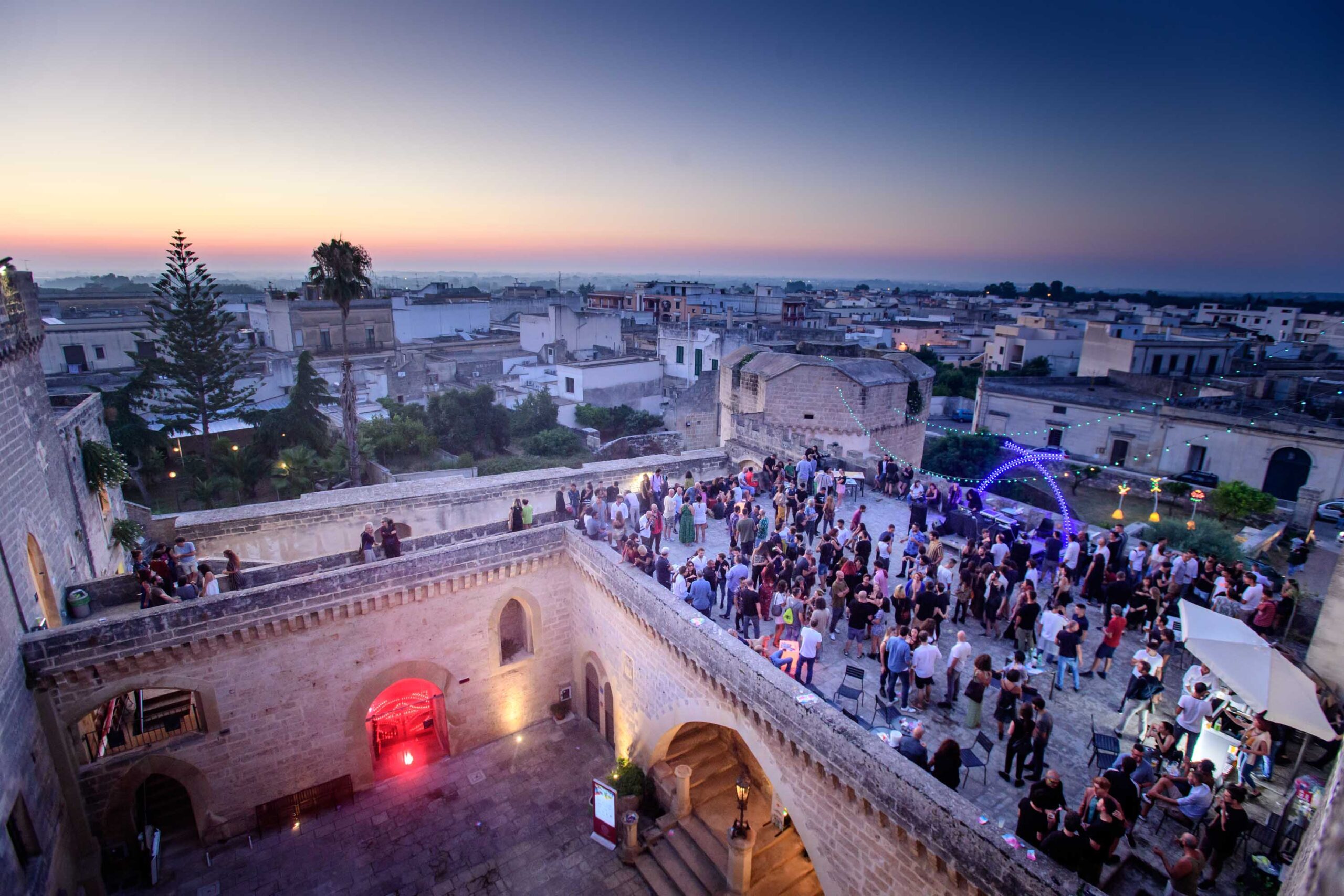
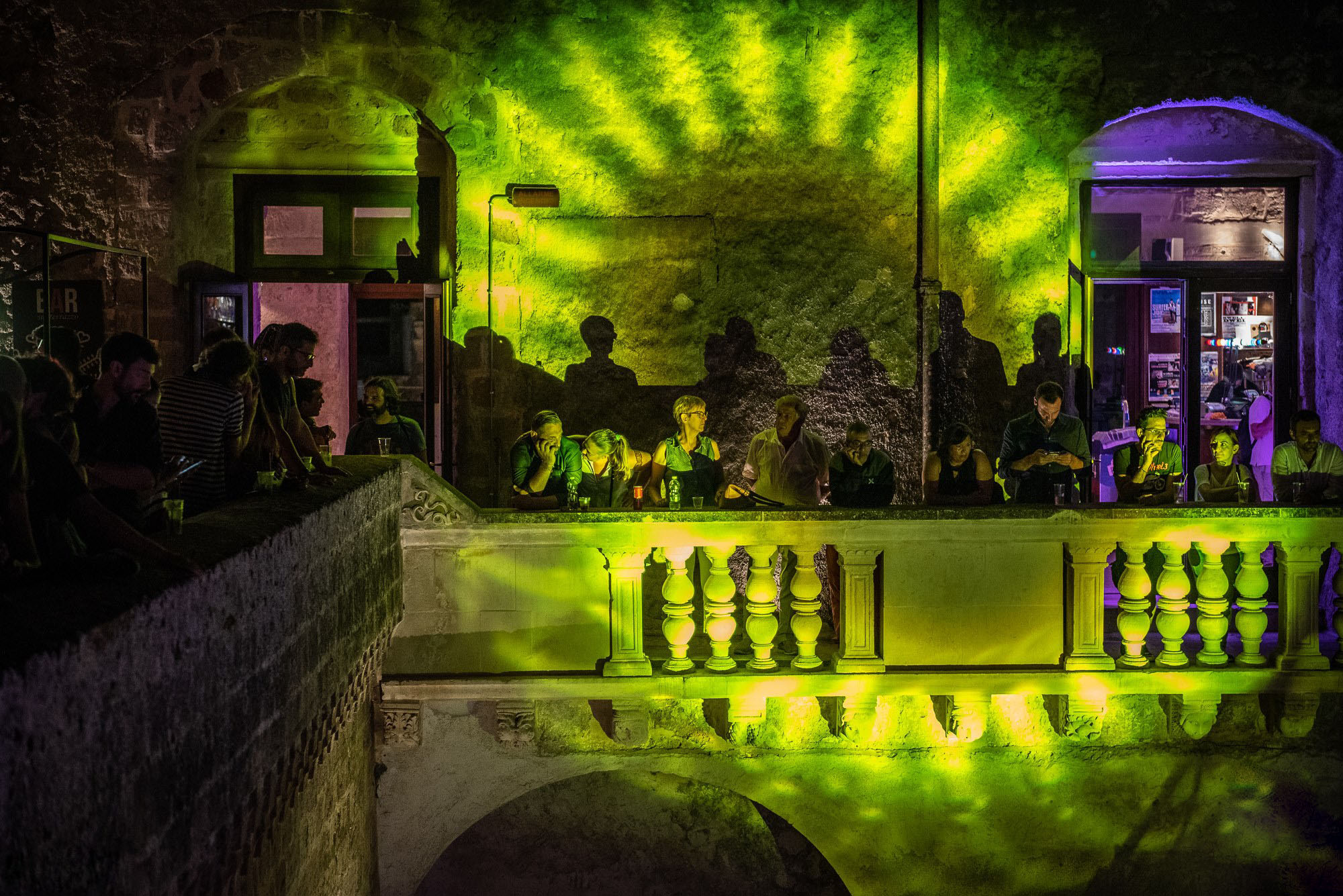
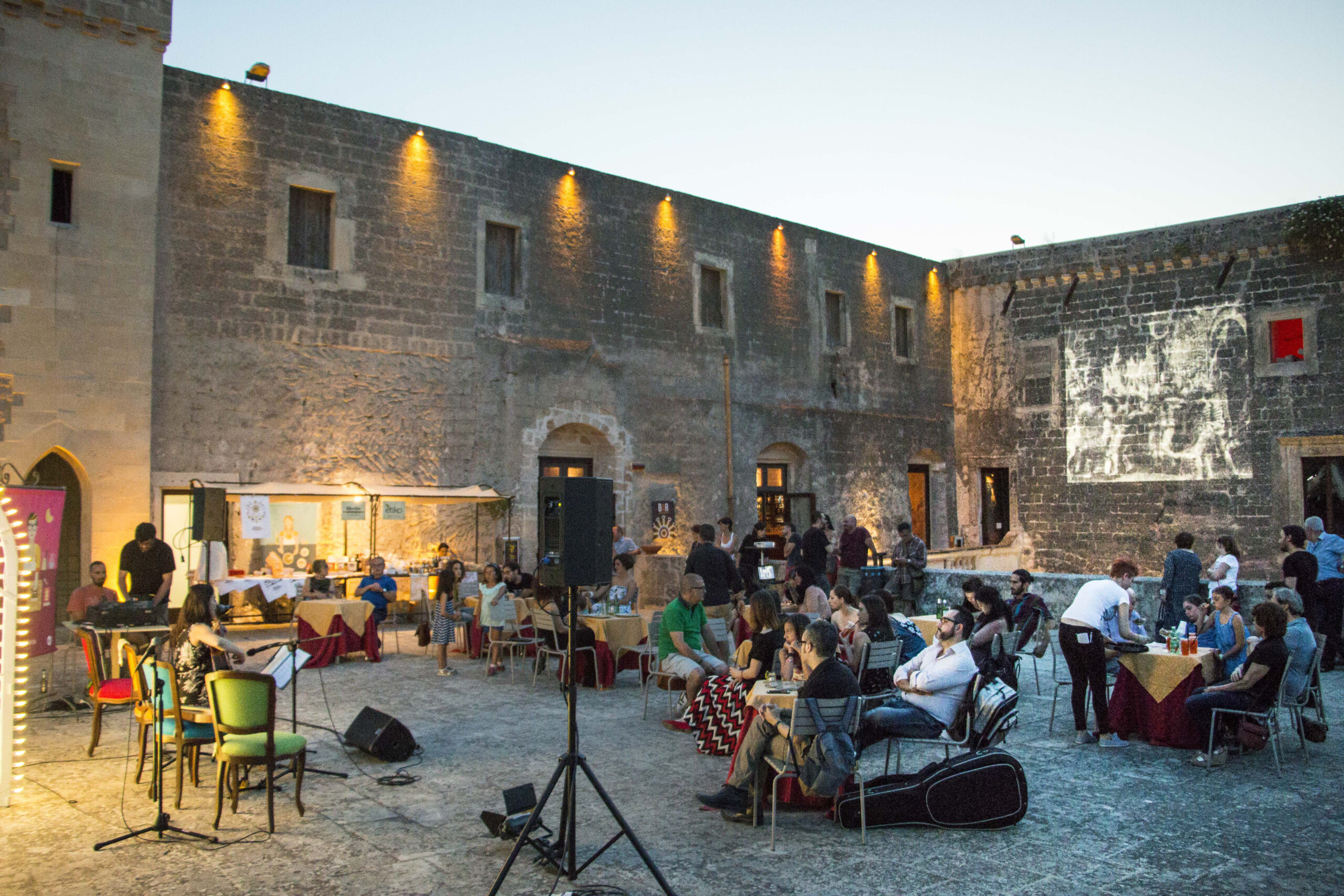
Since December 1999, it has been municipal property and today, with the ‘Castello Volante’ project, it is a cultural space open to the community and the local area, a creative workshop for the production of images, sounds, and visions.
1505 > 1519
From outpost to fortress
Of the medieval core of the 13th-century castle, one can still admire today the three square-plan towers, with sharp edges and battlements, rising about twenty meters above the moat. Between 1505 and 1519, the fortress was expanded by Marquis Giovan Battista de’ Monti, who strengthened it to adapt it to the new demands of warfare. The advent of gunpowder, in fact, made the medieval towers and their sharp edges too fragile a target to enemy artillery fire. Thus, the ancient structure, like a Russian doll, was incorporated into the Renaissance fortress that gradually developed where the ancient medieval moats extended. A castle within a castle, in short, where the curtain walls and battlements alternated with the four truncated-conical towers. Each tower was entrusted to a Saint and one of the Cardinal Virtues, and each of these figures still speaks today through the epigraphs that appear beneath the reliefs of the protectors, threatening the enemy or advising on how to defend oneself.
1662
The Ducal Palace
In 1649, the de’ Monti dynasty died out, and the castle, after various vicissitudes, was auctioned off and purchased by the Trane barons, who over the course of thirteen years demilitarized it, refined it, and transformed it into a stately home. The façade, completed in 1662, as can be read in the cartouche beneath the sculpture of Francesco Trani, was enriched with busts of illustrious figures and iconological statues depicting the principles that must guide anyone who aspires to be recognized as a gentleman. The castle thus speaks again thanks to the epigrams engraved on the window lintels, composed by the Corigliano poet Andrea Peschiulli, which should be read in conjunction with the full-relief statues in the niches and the busts crowning the large windows.
From 1788 to today
The modern era
Starting in 1788, with the extinction of the Trani family, the fortress was used as a factory. It served as a mill and pasta factory, whose sign, MULINO A VAPORE SAN NICOLA, still stands over the castle’s entrance gate; it was an oil mill for the production of lampante oil, and finally a tobacco factory. Some of its parts, such as the bastions and the main floor, were used as residences for many families from Corigliano.
Today, the castle of Corigliano d’Otranto continues to exert its charm, attracting visitors from around the world. It is no coincidence that historian Filippo Bacile di Castiglione called it “the finest example of sixteenth-century military and feudal architecture in the Terra d’Otranto area.”
The “Flying Castle” project has been underway since 2018, thanks to an experimental management project involving three cultural enterprises and the Municipality of Corigliano d’Otranto. In the Castle’s spaces, images, sounds, and visions take shape and reverberate through a multidisciplinary laboratory open to the local community, bringing together history, architecture, photography, cinema, musical creations, food, and craftsmanship, reinterpreted in a contemporary key.