The Village of Corigliano d'Otranto
A labyrinth of narrow, short alleys in the heart of Grecìa Salentina where Lecce Baroque and ancient Greek influence converge.
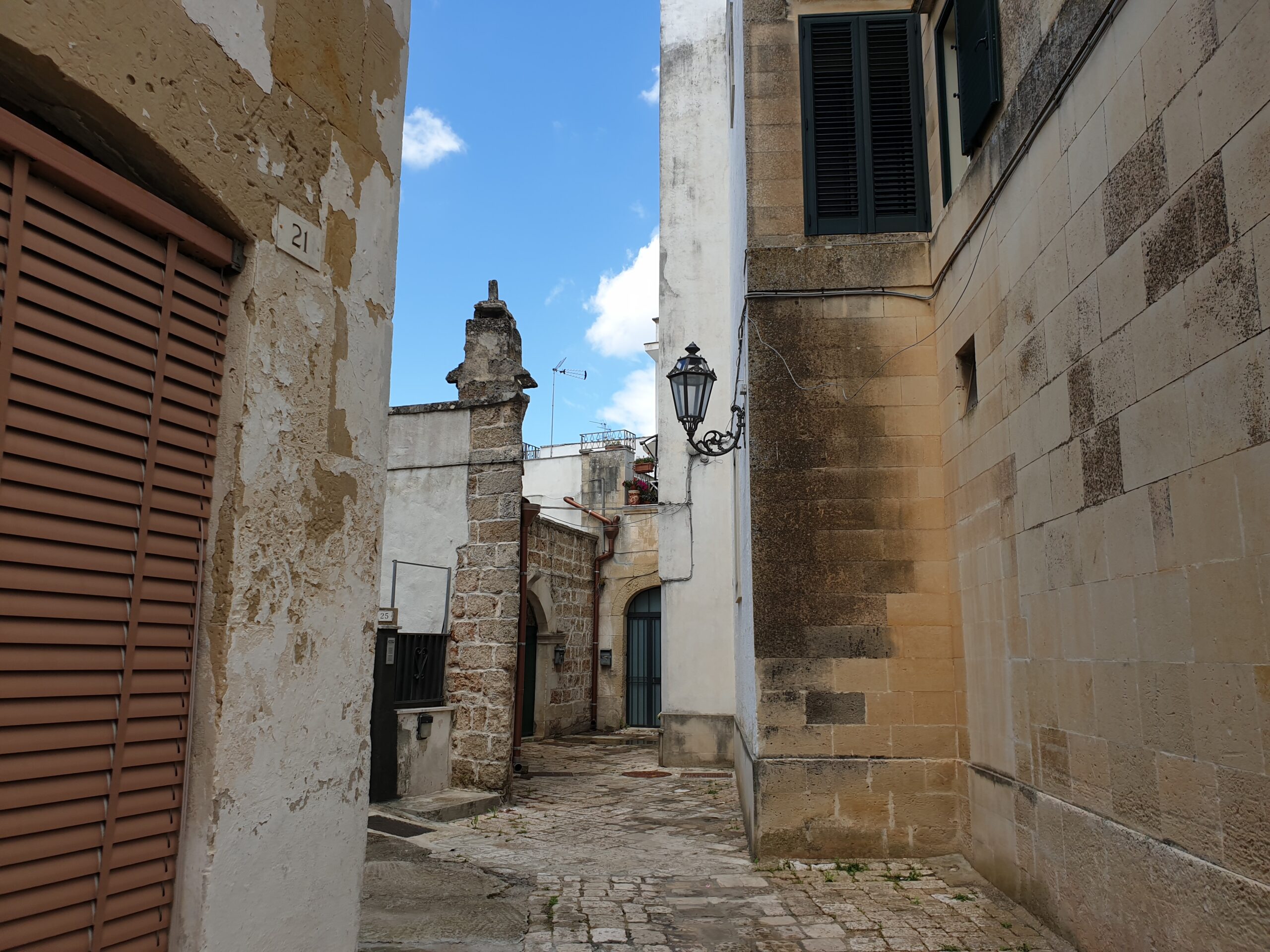
Embraced by its sixteenth-century walls, the ancient village of Corigliano d’Otranto is dominated by white limestone and Lecce stone.
It presents itself as a maze of narrow, cobbled alleys, lined with tall noble palaces and low family homes clustered around a courtyard. It is precisely the courtyard house that characterizes this town, like all the villages of the Grecìa Salentina region, revealing the ancient Greek influence not only in the architecture but also in the language.
Following the maze of streets, starting from the Castle, means reaching the solemn, circular opening of Piazza San Nicola, the heart of the town, and taking a first break to let your gaze wander all around. Here is Palazzo Comi (17th-18th century), a former noble residence with its pilasters, its ground-floor arches, an angel supporting the weight of a false mullioned window, and the statue of the Immaculate Conception on the first floor. On the opposite side, positioned in a corner of the square, stands the Civic Clock Tower with its bell gable. Its three architectural orders, marked by string courses, preserve the epigraphs of the Corigliano poet Andrea Peschiulli, the original sundial, and suggest the ancient oral tradition according to which the first clock placed here was war booty captured by the Corigliano people from the Turks. A little further on, the column with the statue of the Madonna delle Grazie stands out: the base bears the date 1848 while the small statue certainly comes from another place and to prove it… you’ll have to look at its back!
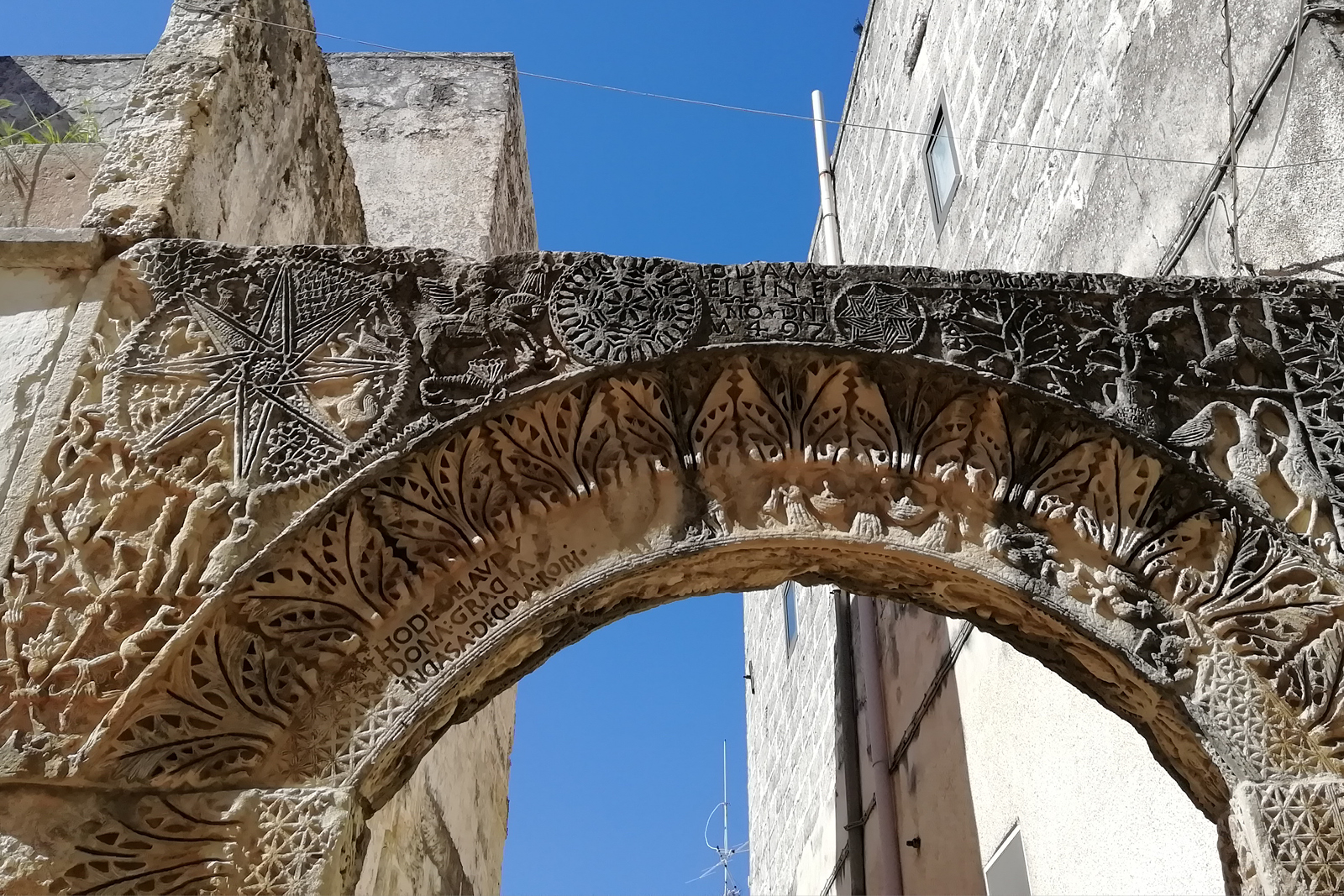
A few steps away, a windy, dead-end alley holds one of the ancient village’s architectural treasures: the Arco Lucchetti, an arch leading to a courtyard, likely the Court of the Lucchetti (or Lucchetta). It consists of three monolithic blocks of richly decorated Lecce stone, almost like the lacework typical of the “dowries” of Southern women. Through human figures, fairytale and legendary transpositions, flowers and fruits, the vicissitudes and virtues of mankind are narrated.
You won’t be able to resist wandering down other alleys, losing yourself in the decorative details of the portals, the hidden messages in the philosophical epigraphs, the keystones that tell of ecclesiastical residences that became underground olive oil mills and then transformed into places of refreshment, and the architecture of a watchtower that adapts to its new role as a bell tower. Attached to the façade of the church, it has a square plan without a crowning spire, with the bell housed by eliminating the column of the mullioned windows. The Church of San Nicola, attached to the bell tower following the expansion work carried out in the 17th century, has a smooth façade enriched by a portal surmounted by a lunette with three sculpted figures: Christ, the Madonna, and San Nicola. The construction date is listed higher up: 1573.
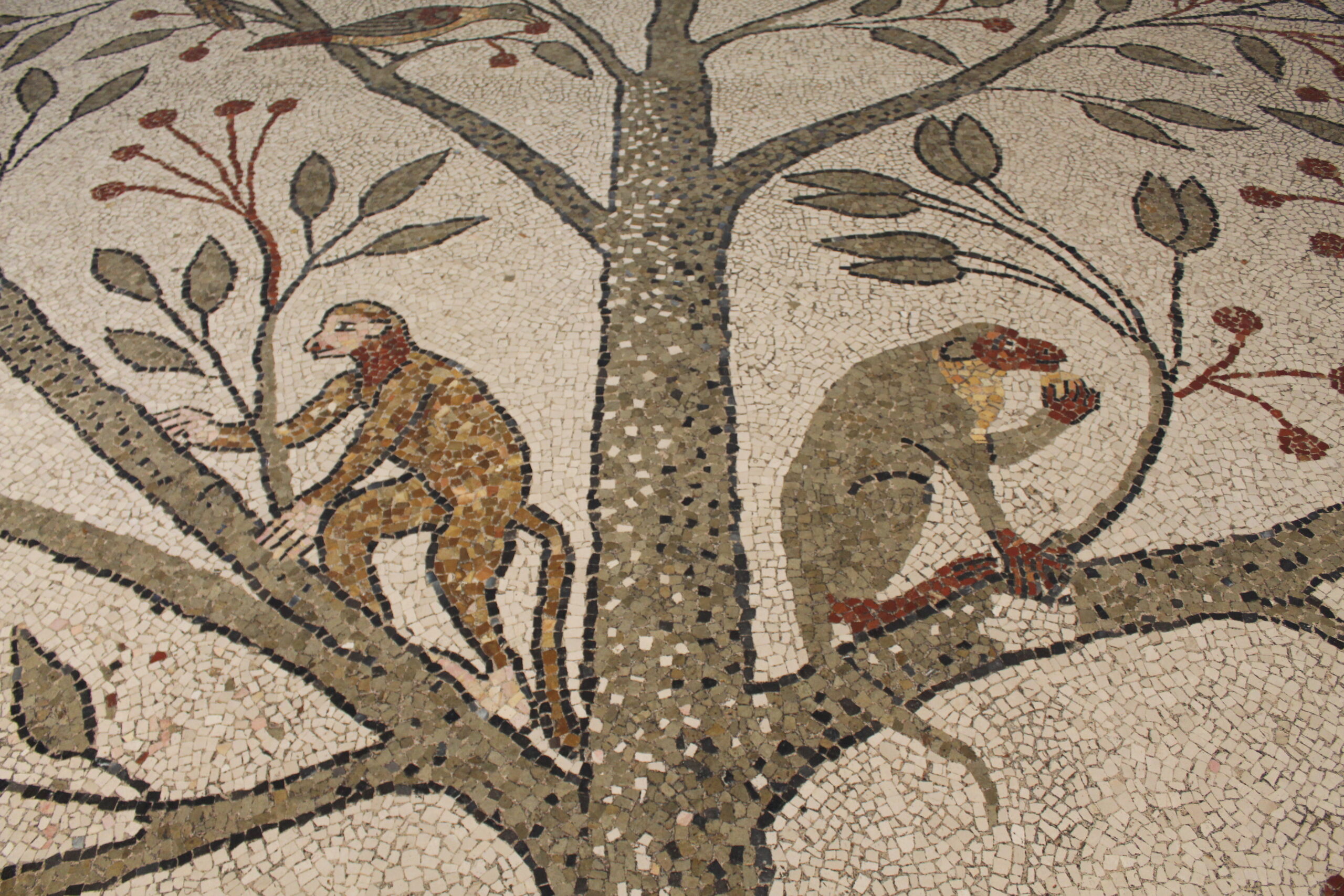
But don’t be fooled by this seemingly linear and unadorned façade. A few steps further up the steps and the Baroque style of the interior will reveal itself, including the side altars along the transept and the high altar. Above all, the mosaic floor, created in 1878, will reveal itself to you. Among the branches and leaves of a tree of life that runs along the central nave, stories from the Old Testament are depicted, an open-air Bible, a moment of Christian education and formation for the entire community.